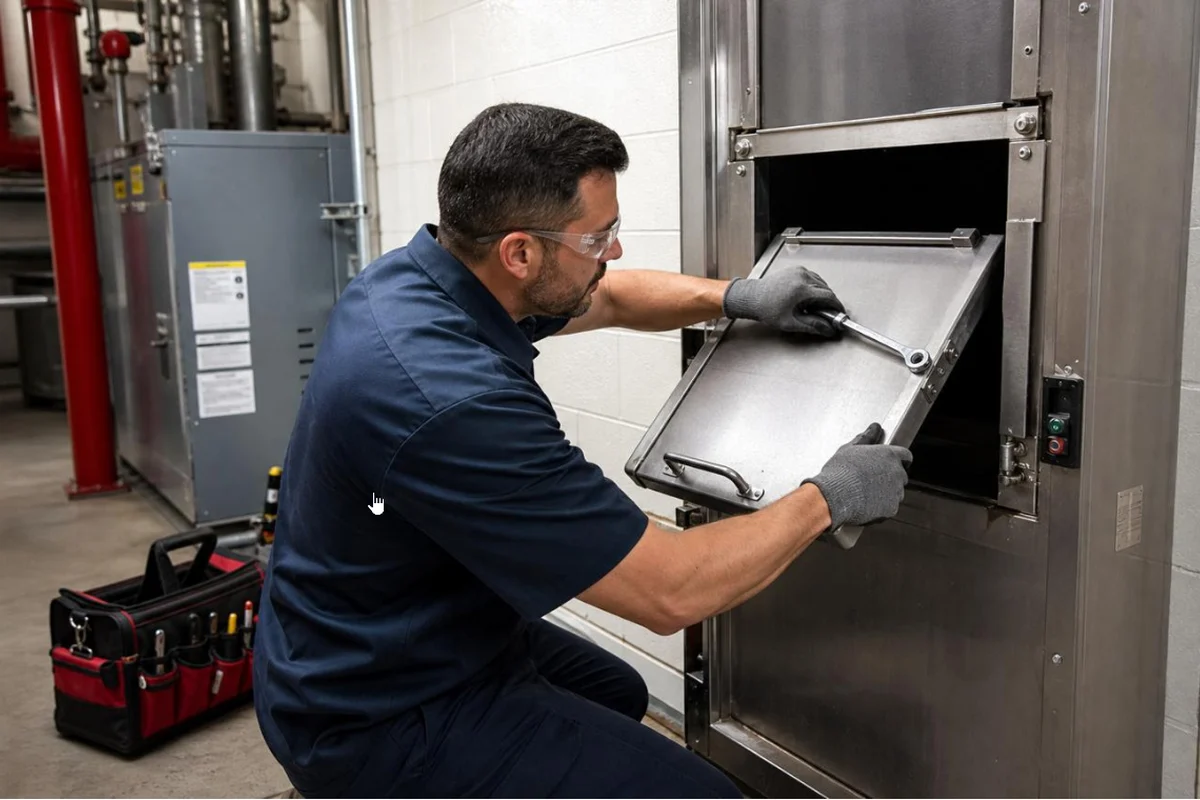
A worn closer may begin as one resident's complaint. If it remains unresolved, a building can also face an unusable intake, waste left on floors, additional cleanup, and disruption at the discharge area. The original component is only part of the eventual work.
The $10,000 figure in this title describes a hypothetical larger repair exposure, not a standard repair price, documented customer bill, or industry average. Actual scope and cost require an inspection. The useful question is how a small defect could spread through your building's operations.
A door that no longer closes properly
Record the floor, door location, and what a resident or staff member observed. A door left open, a damaged handle, or a latch that no longer engages warrants attention. Do not treat tape, a wedge, or a resident workaround as a repair. Have a qualified technician assess the assembly and its approved components.
The discharge area is part of the same system
The chute's lower end may discharge into a collection room or a compactor. A problem there can affect several floors at once. Include the discharge assembly, access conditions, receiving container, and related equipment in the service request rather than reporting only the visible upstairs symptom.
Count the work around the repair
A larger incident can include diagnosis, replacement components, specialist labor, cleanup, temporary waste arrangements, and additional collections. These are possible cost categories, not a quoted package. Request an itemized proposal and identify which expenses are necessary now, contingent on findings, or preventable through a different service arrangement.
Keep a history of repeat defects
When the same door is reported again, send the earlier work order and photos with the new request. Repeated faults may need a broader assessment instead of another isolated adjustment. Record what was repaired, what was recommended, and whether the recommendation was approved so decisions do not disappear between staff changes.
Use inspections to make a timely decision
A qualified inspection can distinguish an adjustment, component replacement, and larger repair scope. Ask for the finding in plain language, the affected location, the recommended action, and any use restrictions. Follow the technician's direction and the building's procedures for managing an affected chute while work is arranged.
Connect the repair to ongoing care
Strategic's chute-repair service addresses existing failures; ongoing inspection, cleaning, and preventive support serve different purposes. A clean interior does not repair a broken door, and a new latch does not clean the shaft. Give each task an owner and a schedule appropriate to the property and installed equipment.
What to take back to your community
A prompt, documented repair decision is easier to manage than an equipment fault surrounded by avoidable operational problems.