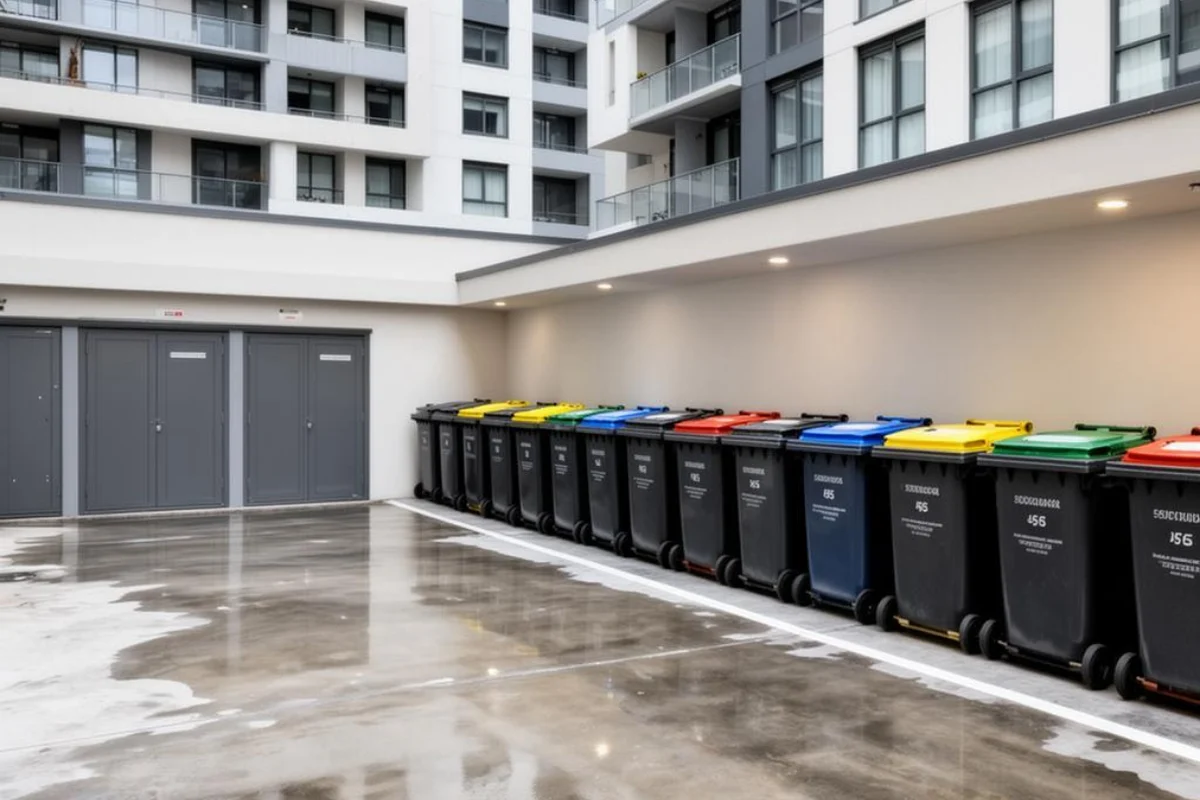
An overflowing dumpster does not always mean the property needs another scheduled collection. It may mean the available capacity is not being used as intended, a bulky item is occupying the space, or the hauler could not complete the pickup.
Look at the area immediately before and after collection, and again during the busiest part of the week. A few consistently timed observations are more useful than one photograph taken after a weekend move-out.
1. The container mix does not match the property
Count the usable trash, recycling, and organics containers, then compare how each fills. One stream may overflow while another remains underused. A property assessment can identify whether container sizes, locations, or the balance between streams need attention. Avoid estimating a permanent requirement from an unusually busy day.
2. Collection timing misses the peak
A service frequency can look adequate on paper and still leave a long gap during the property's highest-volume period. Compare collection days with move-outs, weekends, and actual fill levels. Confirm completed pickups rather than assuming every scheduled stop happened. A timing adjustment and an additional collection are different decisions.
3. Bulky items occupy container space
Furniture, mattresses, and large boxes can change the appearance and usability of an enclosure quickly. Create a clear route for approved bulky items and tell residents how to request it. Keep those materials out of the container-access path. Never ask residents or untrained staff to climb into a bin to create room.
4. Material is going into the wrong stream
A trash bin may fill faster because residents cannot identify or reach the recycling or organics containers. Conversely, contamination can make another stream difficult to service. Check the local accepted-items guidance and the signs residents actually see at the point of disposal, including after dark.
5. Available containers are difficult to reach
A blocked gate, awkward layout, or bags piled in front of a container can make usable capacity effectively disappear. Check the route for residents and the hauler separately. Document access obstructions and arrange an appropriate cleanup rather than directing people to squeeze between equipment or move heavy containers themselves.
Choose the response that matches the evidence
Keep photographs, incident notes, and completed-collection records together. Then discuss container configuration and collection service with the hauler, alongside waste-area upkeep and bulky-item support with Strategic. Extra service may be necessary, but it should address a demonstrated capacity gap rather than hide a recurring access problem.
What to take back to your community
Find out why capacity is disappearing before deciding how much more capacity to buy.