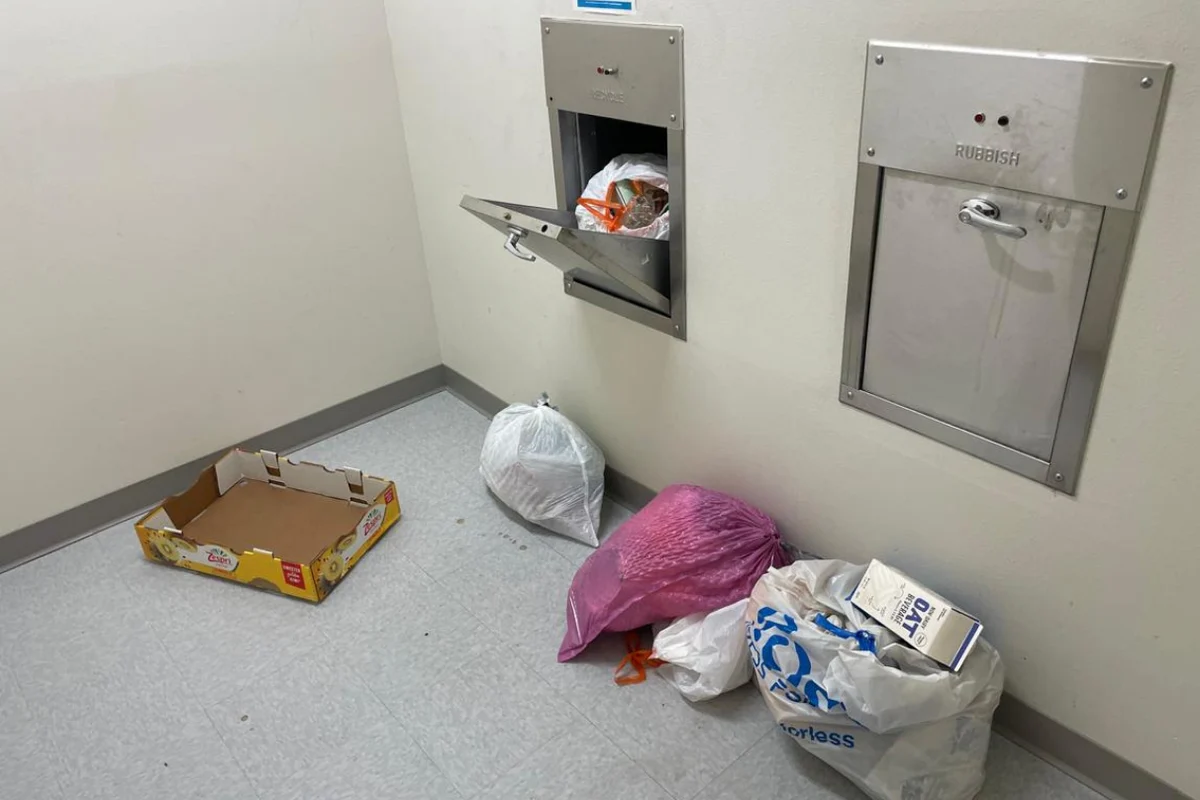
A trash chute is more than a convenient opening in the wall. It connects parts of a building, and its installed door and discharge assemblies perform functions that ordinary housekeeping cannot replace.
A manager's role is to recognize an observable concern, document it, and arrange the appropriate qualified inspection. A visual walk-through does not certify fire-code compliance or replace the building's inspection requirements.
Closing and latching deserve attention
CHUTES International describes self-closing and self-latching intake doors on its trash chute systems. A door blocked by a bag or held open by an improvised prop is a reason for prompt attention. Keep residents away from the affected opening and follow the property's reporting and temporary-use procedures while qualified help is arranged.
The discharge assembly has a separate role
The manufacturer's trash-chute information also describes a discharge damper with a fusible-link assembly. The exact components depend on the installed system. Have the technician identify the equipment, its condition, and the applicable maintenance instructions. Do not ask onsite staff to remove links, bypass controls, or carry out a functional fire-door test.
Look for visible changes without dismantling anything
Report damaged door hardware, a door that appears unable to close, visible impact damage, or accumulated materials interfering with access. Include the location and photographs in the request. An appearance check cannot establish whether hidden components work, and a tidy room alone cannot establish that the chute is safe.
Cleaning and repair solve different problems
Cleaning removes material and residue; repair addresses defective components. An odor-control product does neither job by itself. Keep the cleaning record and equipment findings together, but obtain a distinct scope for each. This helps managers avoid treating a housekeeping visit as proof that a mechanical or fire-protection concern was resolved.
Keep qualified findings and completed actions together
Retain the inspection report, affected locations, recommended work, approvals, and completion record. Ask the qualified provider and local authority about requirements for your building and installed system. If smoke, fire, or another immediate danger is present, follow emergency procedures and contact emergency services rather than waiting for a maintenance visit.
Make the service request specific
Strategic's chute team can assess repair concerns and recommend work. Describe what was observed instead of diagnosing a fire rating or compliance status yourself. A useful request identifies the door or discharge area, the recurring symptom, any prior work, and the temporary arrangements already made by management.
What to take back to your community
Recognize visible concerns early, preserve the equipment's safety functions, and use qualified findings to decide the next action.