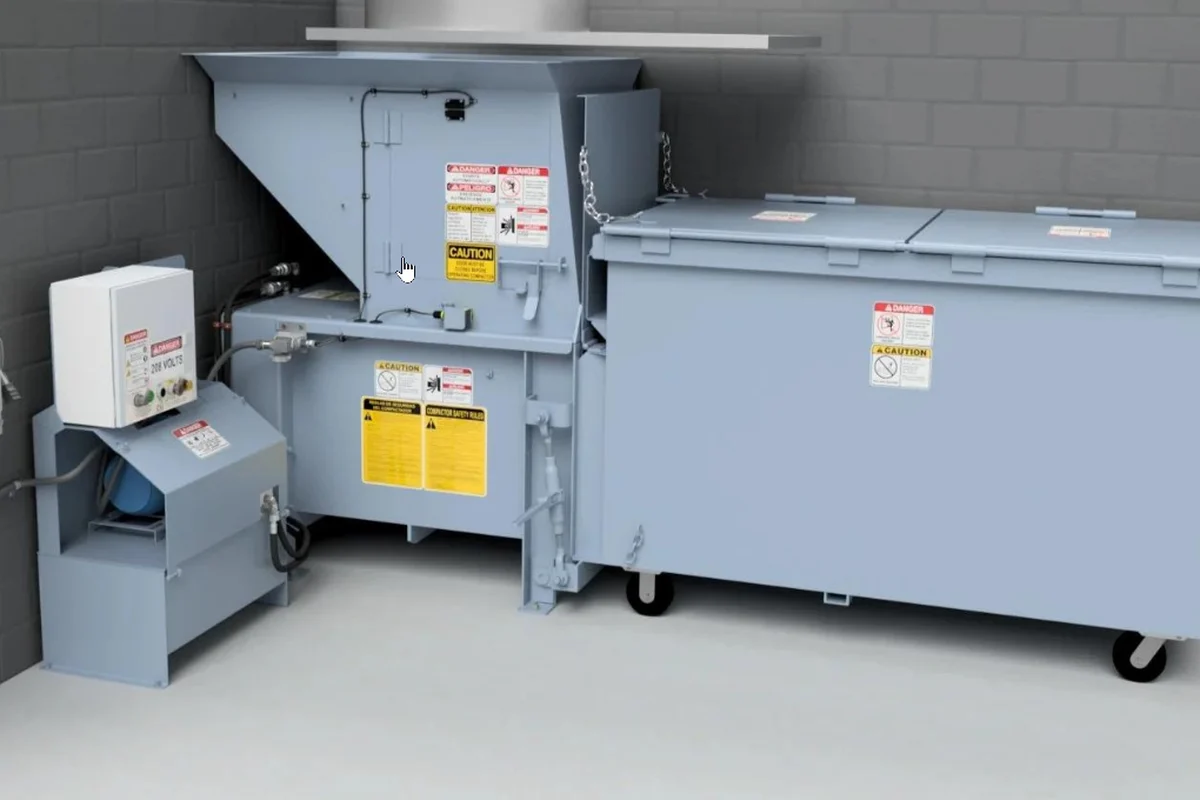
A compactor problem affects more than the machine. Waste can accumulate upstream, the receiving container may not be ready for collection, and residents may lose their usual disposal route. A clear report helps the technician separate symptoms from the underlying cause.
CHUTES International identifies leaks, ineffective compaction, unusual noise, and recurring shutdowns among reasons to request service. Observe from permitted areas; only trained, authorized personnel should operate or service the equipment under its instructions and energy-isolation procedures.
1. A new noise or vibration
Describe when the sound was reported and how it differs from normal operation. Do not repeatedly run the machine to capture it. A technician may need to assess mechanical, hydraulic, or other causes; the sound alone does not establish which component has failed.
2. Fluid where it should not be
Report visible drips or pooling without touching the fluid or searching for a pressurized leak. Keep people away from the affected walking area according to property procedures. Give the service provider the location, photographs taken safely, and any earlier leak history.
3. Slower or ineffective compaction
Record a change from the machine's normal performance, including when it began and whether waste started accumulating. Ineffective compaction is a service symptom, not proof that the property simply needs a larger container. Have the equipment assessed before changing operating assumptions.
4. Persistent odors around the system
An odor may relate to residue, collection timing, retained waste, or another condition. Compare cleaning and collection records with equipment reports. Keep cleaning and mechanical assessment as distinct tasks so a housekeeping visit is not mistaken for a completed machine repair.
5. Recurring jams or backed-up waste
Record what was reported and restrict access as required by the building's procedures. Do not reach into the compactor or chute, remove a guard, or improvise a way to push material through. Clearing equipment is work for authorized personnel following the machine's instructions.
6. Frequent stoppages or resets
Keep the dates, displayed indications, and service history available for the technician. Repeated resets can conceal a recurring fault without explaining it. Do not bypass an interlock or continue using an unreliable machine against the manufacturer's or qualified provider's direction.
Give the technician a useful handoff
Provide the machine identification, location, observed change, recent work, and impact on collection. Ask for the finding, repair recommendation, and return-to-service direction in writing. Strategic's compactor maintenance is an add-on service; confirm the property's actual scope and arrangements rather than assuming it is included in every plan.
What to take back to your community
Report a change early and let qualified service identify the cause; repeated workarounds are not a maintenance plan.