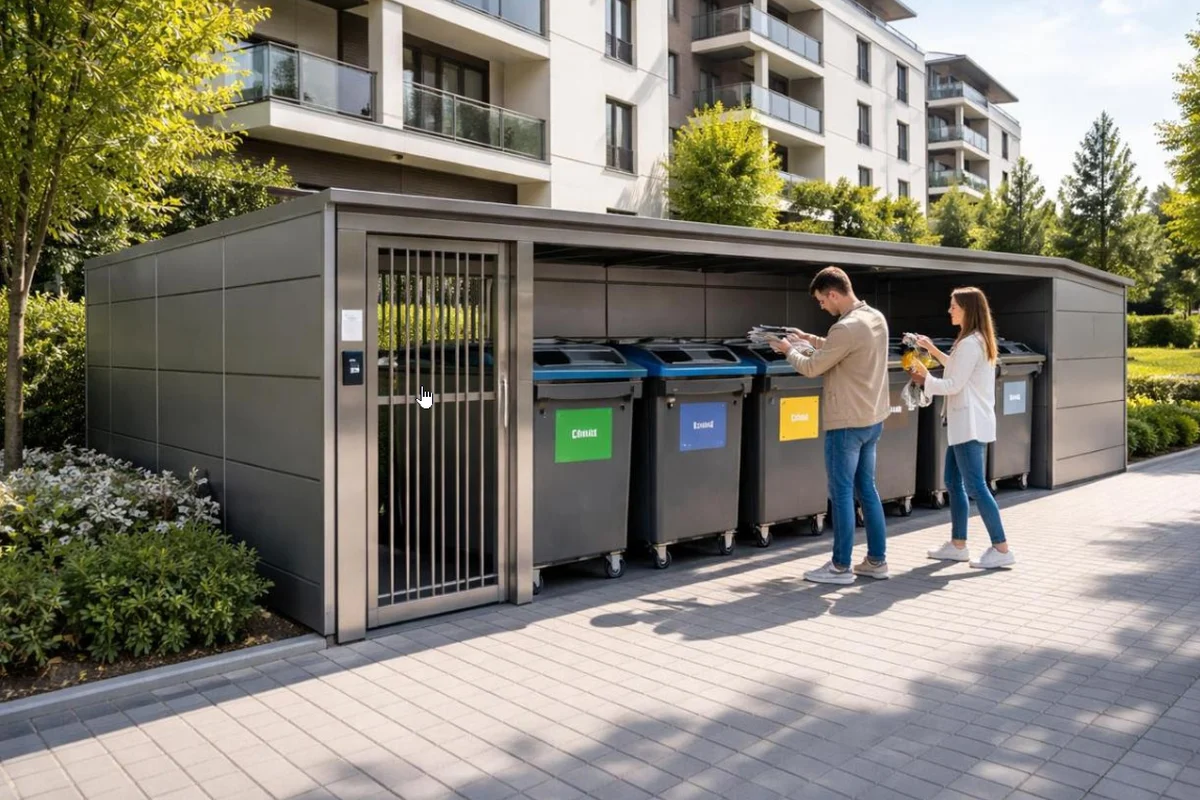
Residents usually report what they experience: a smell in the hallway, bags on the floor, or a bin they cannot use. The work order may say trash, but each complaint can have a different cause and a different owner.
A useful playbook makes the next action clear before the inbox fills up. It connects observations, service responsibilities, and resident updates so the same issue does not start from zero every time someone reports it.
Give every report a location and a category
Use the building, floor, enclosure, or container number rather than a general description. Categorize the issue as overflow, odor, housekeeping, missed collection, equipment, or access. Add the time observed and a photo taken from a safe position. This makes reports comparable and helps route them to the right person.
Set a routine for the areas residents use
Agree on the service scope for enclosures, chute rooms, common-area cans, and bulky-item locations. Match the routine to property conditions instead of waiting for a complaint threshold. A written task list should identify who checks the work and how an exception reaches the onsite manager.
Treat odors as a condition to investigate
Check the collection history, visible residue, cleaning record, and any equipment issue reported in the same area. An odor-control system and cleaning have different roles. If a smell persists, request an assessment rather than repeatedly adding fragrance or assuming the same cause applies across the property.
Separate a missed pickup from a full container
Confirm what the hauler completed and whether access was available. Record a missed collection as a service issue; record genuine capacity shortfalls separately. Strategic's Customer Solutions support can help with hauler follow-up within the community's service arrangement, while routine onsite work addresses the conditions around the containers.
Make resident updates specific
Tell residents which area is affected, the approved alternative disposal location, and how to report a problem. State a completion time only when it has been confirmed. A short update that identifies the next action is more useful than a broad promise that everything is being handled.
Close the loop and review repeat locations
A work order is complete when the condition is resolved and the record reflects the outcome. Review locations that generate repeated reports. If the same issue returns after cleanup, revisit the container arrangement, service schedule, equipment condition, or communication rather than counting every visit as a separate success.
What to take back to your community
Consistent upkeep and clear follow-through give residents fewer reasons to report the same problem again.