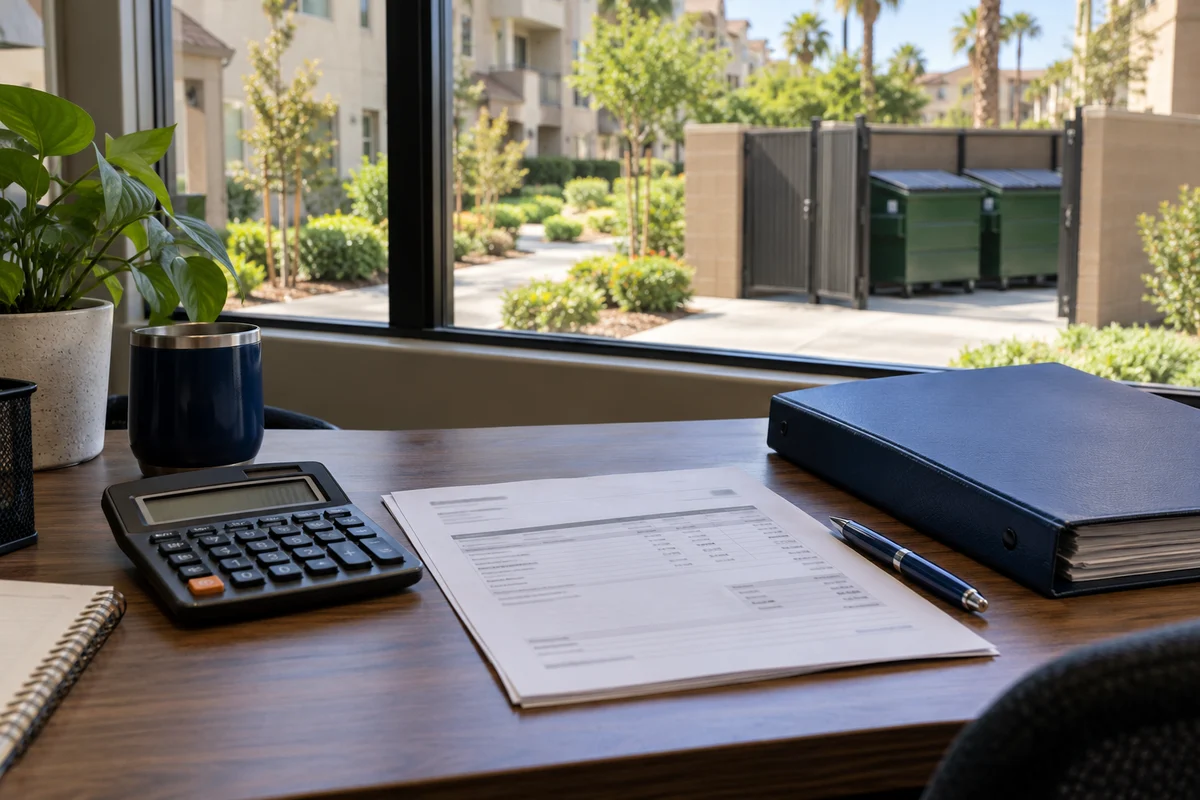
The hauling invoice is only one part of a community's trash budget. A property can keep the same collection contract and still spend more through extra service requests, repeated cleanup, equipment failures, and time taken away from the onsite team.
Start with your own records rather than an assumed industry average. Review invoices, work orders, photographs, and staff notes together. The seven categories below give community managers and HOA boards a practical way to see where the money is going.
1. Overage and excess-material charges
Check for charges tied to material above container limits or left outside the bins. An enclosure may look spacious while its usable container capacity is too small. Compare the charge with a photograph and the collection schedule before deciding that another pickup is the answer. Fees depend on the hauler and agreement.
2. Recycling contamination charges
Mixed rubbish, liquids, and unsuitable items can create problems in the recycling stream. If a charge appears, request the reason and supporting documentation. Then compare the material with your local program's accepted-items list. Correcting a confusing label or a poorly placed bin can be more useful than sending a general reminder.
3. Emergency and additional pickups
An extra collection solves an immediate capacity problem, but repeated requests deserve investigation. Record whether each call followed a missed pickup, a move-out, a holiday, or an equipment outage. That pattern helps distinguish a temporary event from a service level that needs to change.
4. Repeated cleanup labor
A ten-minute cleanup is easy to overlook until it happens every day. Track time spent collecting loose debris, moving bags, and returning to the same overflow area. Include onsite staff time as well as service-provider invoices. This is operating effort that may never appear under the trash account.
5. Pest-related follow-up
Food residue and exposed waste can lead to pest complaints and additional coordination with the property's pest-control provider. Keep waste-area cleaning and that provider's work in the same incident record. Do not assume a scent product resolves the cause; collection reliability, housekeeping, and access conditions also matter.
6. Deferred equipment repairs
A door that will not latch or a compactor that repeatedly stops can disrupt the entire waste route through a building. Ask for an inspection and a written recommendation while the issue is still identifiable. Separate repair costs from related cleanup and extra collection so the full effect stays visible.
7. Management and resident-service time
Complaint emails, service-provider calls, resident updates, and repeat work orders all consume staff capacity. Record how often the same problem returns and who owns the follow-up. Time recovered from those tasks is a useful operational measure, even when it does not immediately reduce an invoice.
Turn the findings into a property-specific plan
Build a simple register with the incident, location, cost or staff time, cause, and next action. Compare a proposed service change with the recurring issue it is meant to address. Strategic's property assessment and ongoing waste-area services can help define that scope; your hauler remains responsible for the contracted container collections.
What to take back to your community
Judge the waste budget by the full operating picture, then address the costs that your property's records actually show.